


Garage Conversion in Los Angeles.
Building it right.
Garage Conversion · Los Angeles, CA
Most garages in Los Angeles are storing boxes that haven't been opened in years. The smarter use of that space is a home — and that transformation is closer than most homeowners think.
SKALWEST Construction specializes in garage conversions across Los Angeles — turning underused two-car garages, detached outbuildings, and single-stall carports into legal, livable, beautifully finished dwelling units. We handle design, permits, and every phase of construction under one roof.
As an experienced garage conversion contractor in Los Angeles, we've completed conversions across the metro area — from Highland Park bungalows to Culver City ranches — and we know exactly what separates a conversion that lasts from one that causes problems down the road.
-
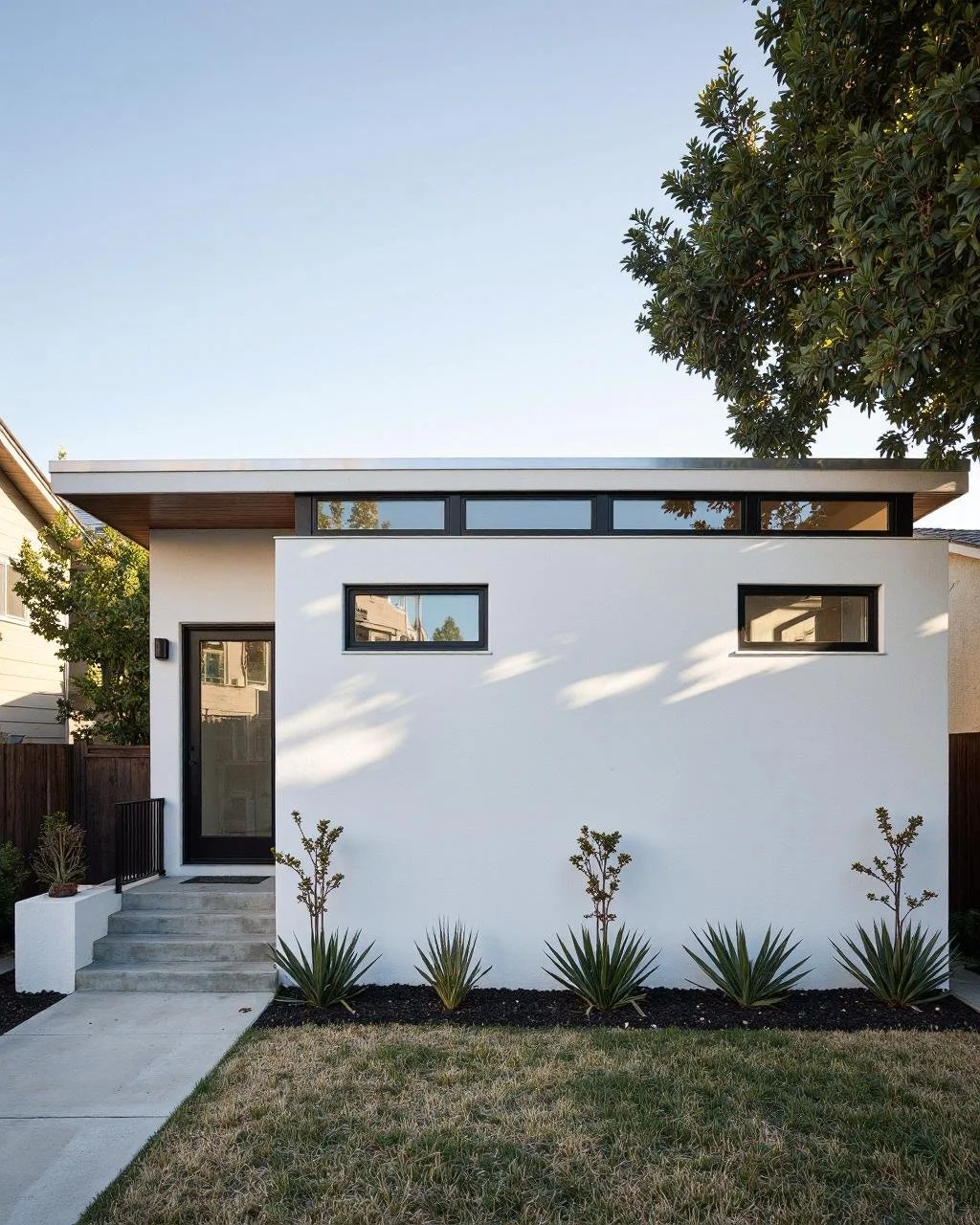
WHAT IS AN ADU
-
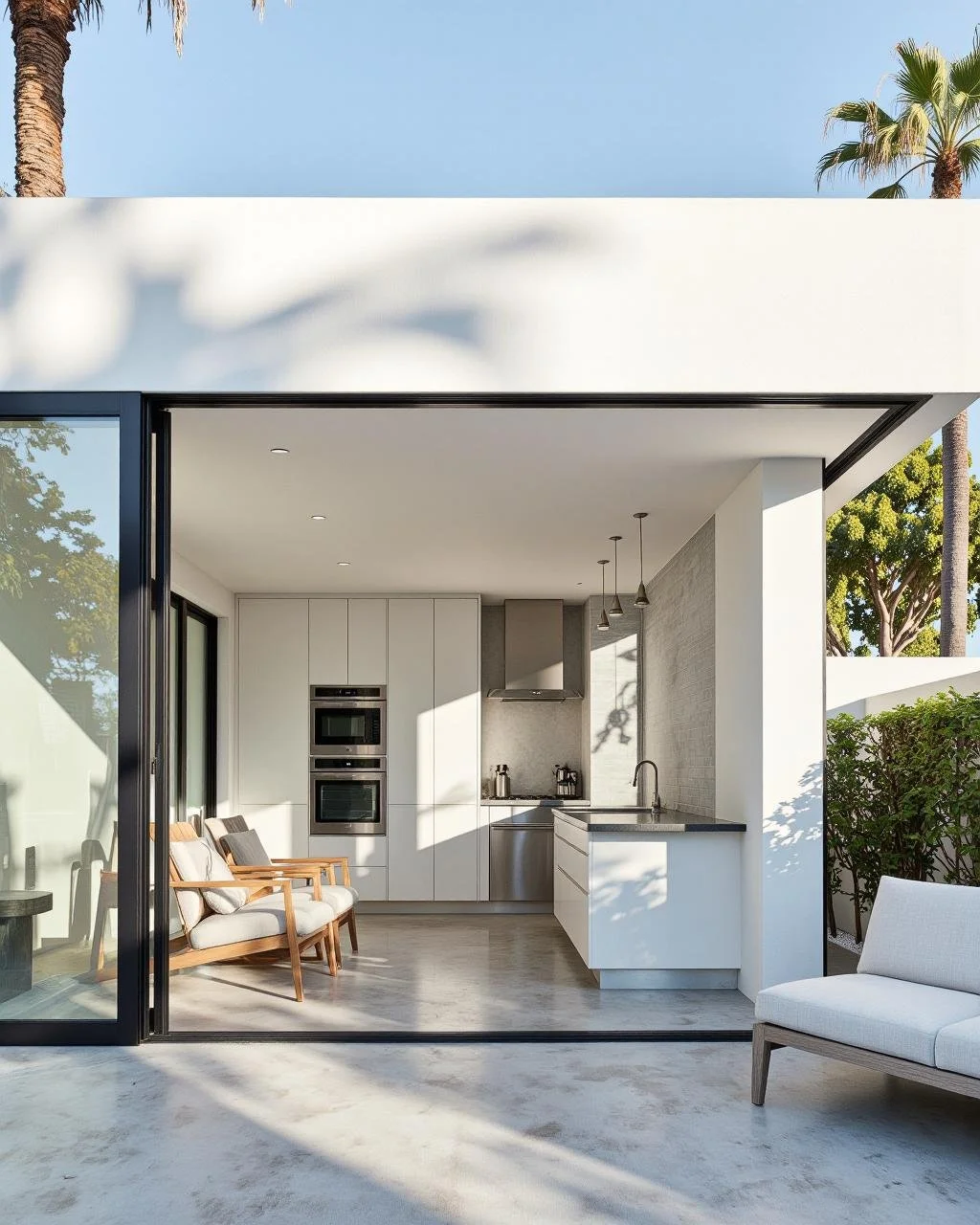
SIZE & RULES
-
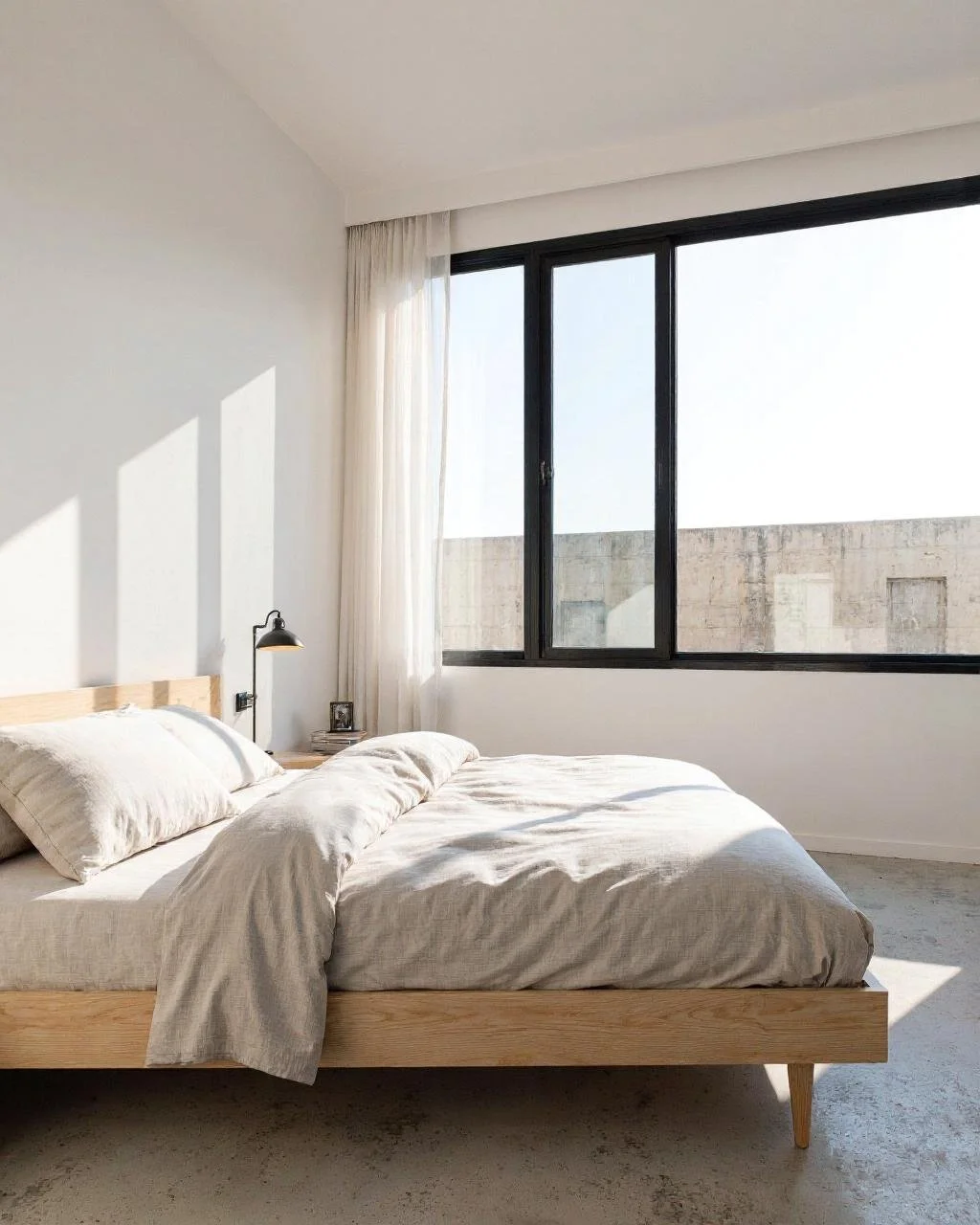
BENEFITS
-
PERMITS
Garage Conversion in Los Angeles - the real picture
The phrase "garage conversion" can make the project sound simpler than it is. You're not renovating — you're reclassifying. A structure built to house cars operates under entirely different building codes than one built to house people. The gap between those two standards is where the real work happens: insulation to meet residential thermal requirements, waterproofing a slab that was never designed to keep a living space dry, electrical panels upgraded to serve a habitable unit, plumbing runs installed where none previously existed, and windows and doors repositioned for both code compliance and livability.
Done correctly, none of that complexity shows in the finished product. Done poorly, it shows up in every uncomfortable season, every utility bill, and every inspection that doesn't pass. As a Los Angeles garage conversion contractor, our job is to close that gap completely — so the finished unit is indistinguishable from purpose-built construction in terms of comfort, performance, and durability.
A garage conversion is the process of transforming an existing non-habitable structure — typically a one- or two-car garage — into a fully permitted, legally habitable dwelling unit complete with its own kitchen, bathroom, sleeping area, and independent entrance.
One often-overlooked opportunity: a garage conversion ADU and a Junior ADU (JADU) carved from the interior of the primary home can coexist on the same Los Angeles lot under current state law. That means two independent income-producing units — or two separate family living arrangements — from a single property, without building anything from the ground up.
-
NO replacement
Parking required in most LA zones
-
Existing Footprint
Setbacks waived for converted structures
-
Faster Permit
Pathway vs. new construction ADU
-
+ JADU option
Combine with a junior ADU on same LOT
What a Los Angeles garage
conversion actually involves
SCOPE & SIZE
The scope of a garage conversion in Los Angeles is determined by the existing structure, the intended use of the finished unit, and what the building's current condition requires to meet residential code. No two conversions are identical — but the core work categories are consistent across almost every project we complete.
Foundation and slab work comes first. Most garage slabs were poured without the moisture barriers required for habitable space. Depending on the slab's condition, remediation may involve applying a waterproof membrane, installing a subfloor system above the existing concrete, or in some cases partial slab replacement. This phase sets the floor — literally and figuratively — for everything that follows.
Framing and insulation follow. Garage walls are typically uninsulated stud bays or concrete block — neither of which meets residential thermal standards. The conversion involves infilling or replacing those assemblies to meet Title 24 energy code requirements, which in Los Angeles means achieving minimum R-values for walls, ceiling, and floor. This work is also when window and door rough openings are established, which drives the spatial experience of the finished unit significantly more than most homeowners realize.
Mechanical, electrical, and plumbing systems are installed from scratch in most conversions. The garage may have had a 20-amp circuit for a door opener and a single light fixture. A habitable dwelling unit requires a full electrical service upgrade, dedicated circuits for kitchen appliances, HVAC installation, a complete plumbing rough-in for kitchen and bathroom, and gas lines where applicable. This phase — the MEP work — is where the investment is largely invisible, and where skimping has the most lasting consequences.
Conversion Scope Area
Typical Requirements
Slab/Foundation
Moisture barrier +subfloor system
Insulation (walls)
R-15 minimum
Insulation (ceiling/roof)
R-38 minimum
Plumbing
Full rough-in (kitchen + bath)
Windows & doors
Egress-compliant, energy rated
Electrical
Full residential service upgrade
16 ft. Mini-split or ducted system
HVAC
Garage door opening
Framed in, finished to match
Four ways a Los Angeles
garage conversion gets used
how homeowners use them?
The finished unit is the same regardless of how it's used — fully permitted, fully habitable, fully independent. What changes is who benefits from it, and how. These are the four most common scenarios we build across the Los Angeles metro.
Rental Unit
A converted garage that meets all residential code requirements can be rented as a standard dwelling unit — long-term lease, month-to-month, or short-term depending on local ordinance. In most Los Angeles neighborhoods, a well-finished garage conversion commands monthly rents that make the construction investment one of the more straightforward financial decisions available to a homeowner. The key word is "well-finished" — a unit that feels like a converted garage does not rent at the same rate as one that feels like a proper apartment, and the gap in rent over years is significant. We build for the latter.
Long-term or short-term income
INCOME-GENERATING
Family Living
Housing aging parents or adult children on the same property — with genuine independence on both sides — is one of the most compelling use cases for a garage conversion in Los Angeles. The distance is measured in steps rather than miles, the arrangement avoids the financial and emotional costs of assisted living or expensive separate rentals, and the unit can revert to rental income when the arrangement changes. Many of the garage conversions we build in Los Angeles are specifically designed with a family member in mind — single-floor layouts, wider doorways, accessible bathroom configurations.
Multi-generational households
MULTI-GENERATIONAL HOUSEHOLD
Home Office or Studio
Professional space, separate from the home
Not every garage conversion becomes a dwelling unit — some become the professional space that the primary home simply can't provide. A converted garage with proper insulation, climate control, dedicated electrical circuits, and a separate entrance becomes a genuinely productive workspace: far removed from household noise, accessible to clients without inviting them into the main house, and deductible in ways that a home office corner cannot match. This use case saw significant growth in Los Angeles following the shift toward remote and hybrid work.
WORK FROM HOME
Guest House
A converted garage positioned as a guest house occupies interesting territory — it doesn't need to serve as a full-time residence, but it absolutely should feel like one. The quality threshold for a guest house is, in some ways, higher than for a rental unit: the people using it are people you care about, and the impression the space makes reflects on the property as a whole. We approach guest house conversions with that standard in mind — finishes that match the primary home in quality, layout that prioritizes comfort over density, and amenities that make a week-long stay genuinely comfortable rather than merely habitable.
Hospitality without the hotel bill
PROPERTY PRESTIGE

Let’s discuss the possibilities of your Garage Conversion!
What we build inside every conversion
inside the build
A garage conversion in Los Angeles that qualifies as a legal dwelling unit must contain specific components — not suggestions, but code requirements. Beyond meeting those requirements, however, is the question of how well each component is designed, sized, and executed. The difference between a conversion that commands top-dollar rent and one that sits vacant is almost always found in these details.
As your Los Angeles garage conversion contractor, we treat each of these elements as an opportunity to add lasting value — not a line item to minimize. Here's how we approach each one.
-
KITCHEN
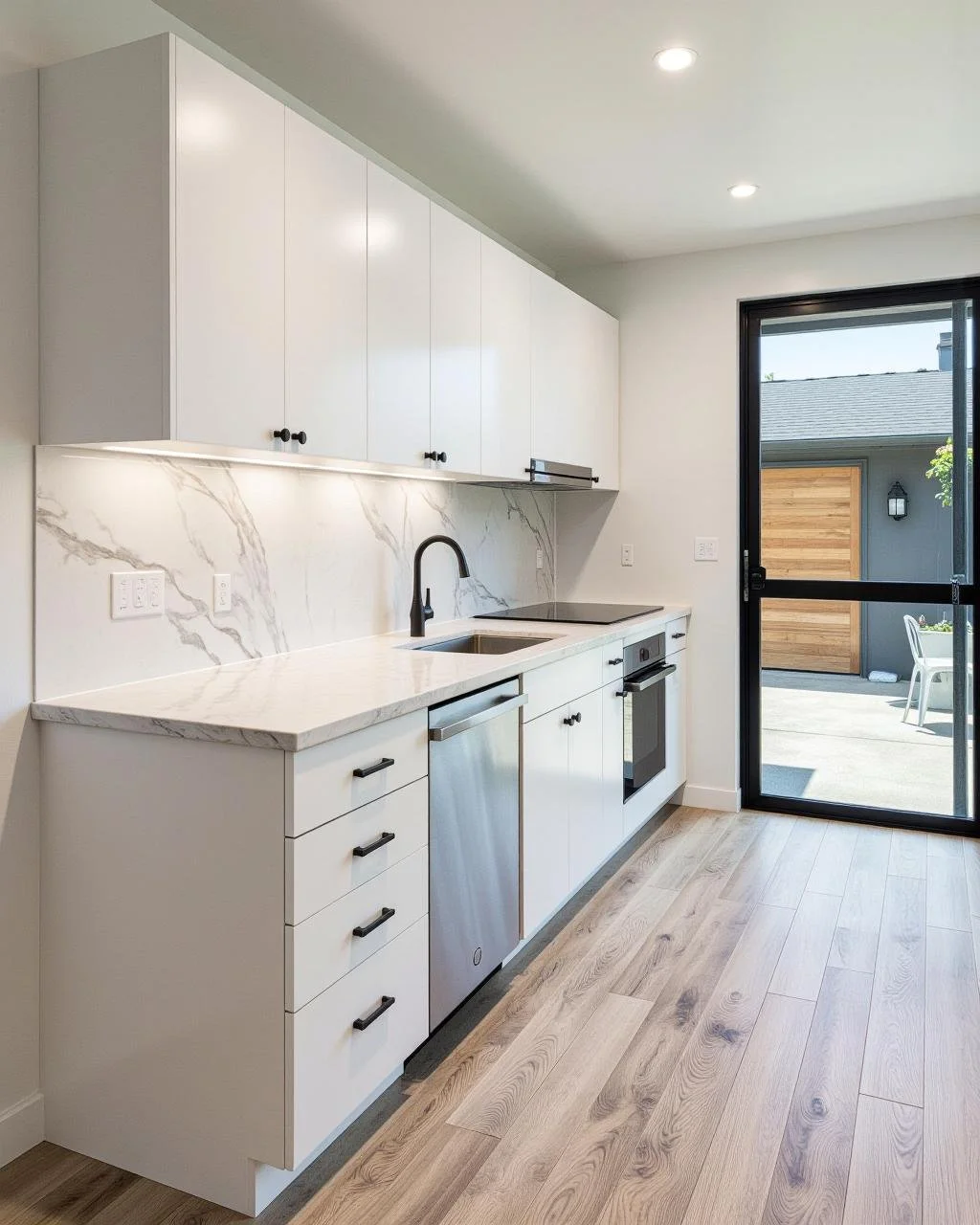
A garage conversion ADU requires a complete kitchen — not an efficiency cooktop tucked into a closet, but a properly configured cooking and prep space with adequate counter surface, cabinet storage, appliances, and ventilation. We treat the kitchen as the functional anchor of the unit, planning it in relationship to the overall floor layout so it doesn't consume the space it serves. Material selection is practical and lasting: surfaces that hold up under daily use and still look good years into a tenancy.
-
BATHROOM
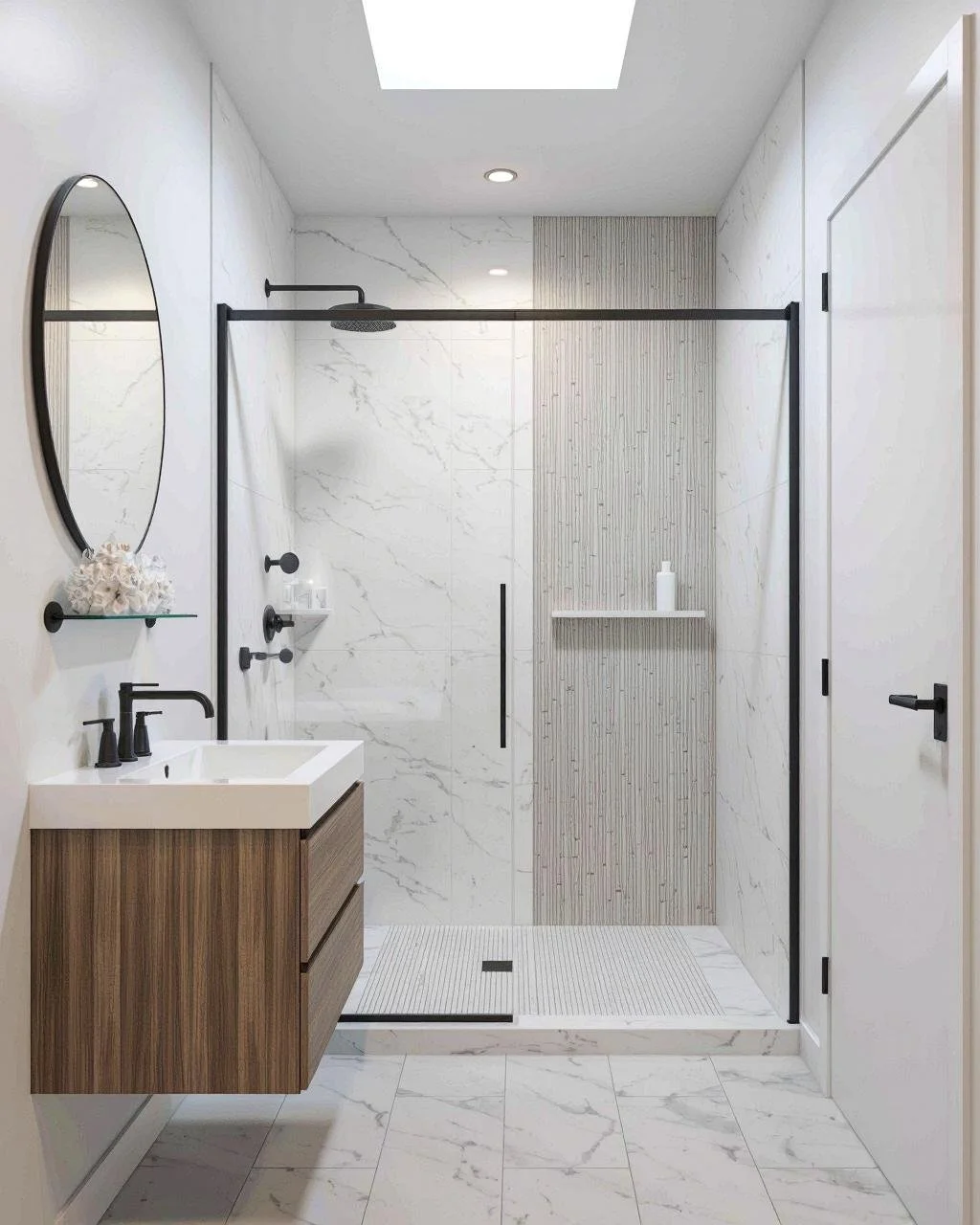
Plumbing a bathroom into a converted garage involves routing supply and drain lines through or beneath the existing slab — work that has to be done correctly the first time, because corrections are expensive and disruptive. We approach bathroom rough-in with precision, then finish it with the same tile quality, fixture standards, and waterproofing detail we'd apply to a primary residence renovation. A well-executed bathroom in a garage conversion adds rental value that compounds every single month the unit is occupied.
-
BEDROOM
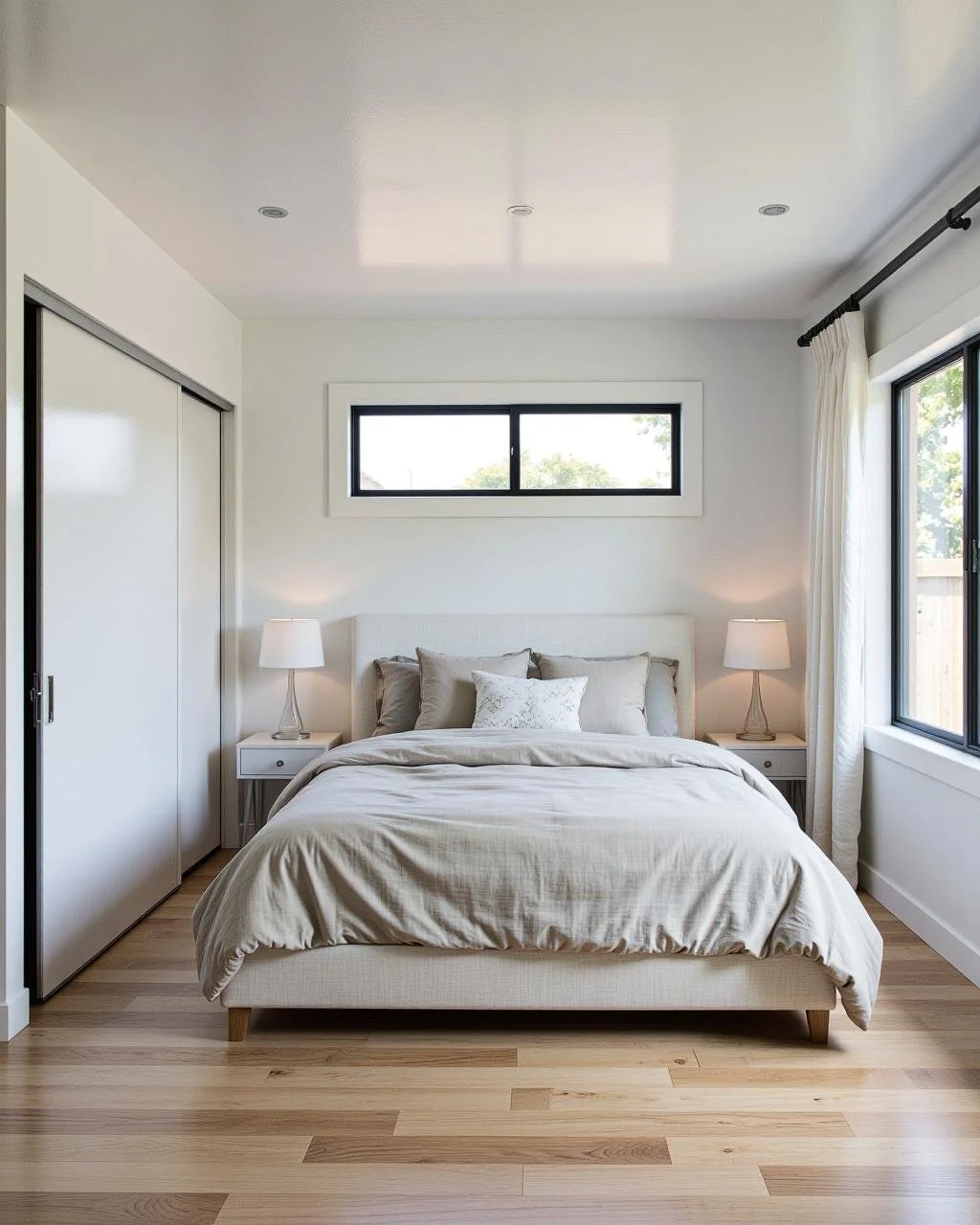
Sleeping rooms in a converted garage must meet minimum code dimensions — 70 square feet, no wall shorter than 7 feet — and must have egress-compliant windows for both ventilation and emergency exit. These are the floor, not the ceiling. We design bedroom areas within conversions to feel like intentional rooms: adequate closet integration, natural light from correctly placed windows, and enough acoustic separation from the living area to function as a genuine retreat within a compact floor plan.
-
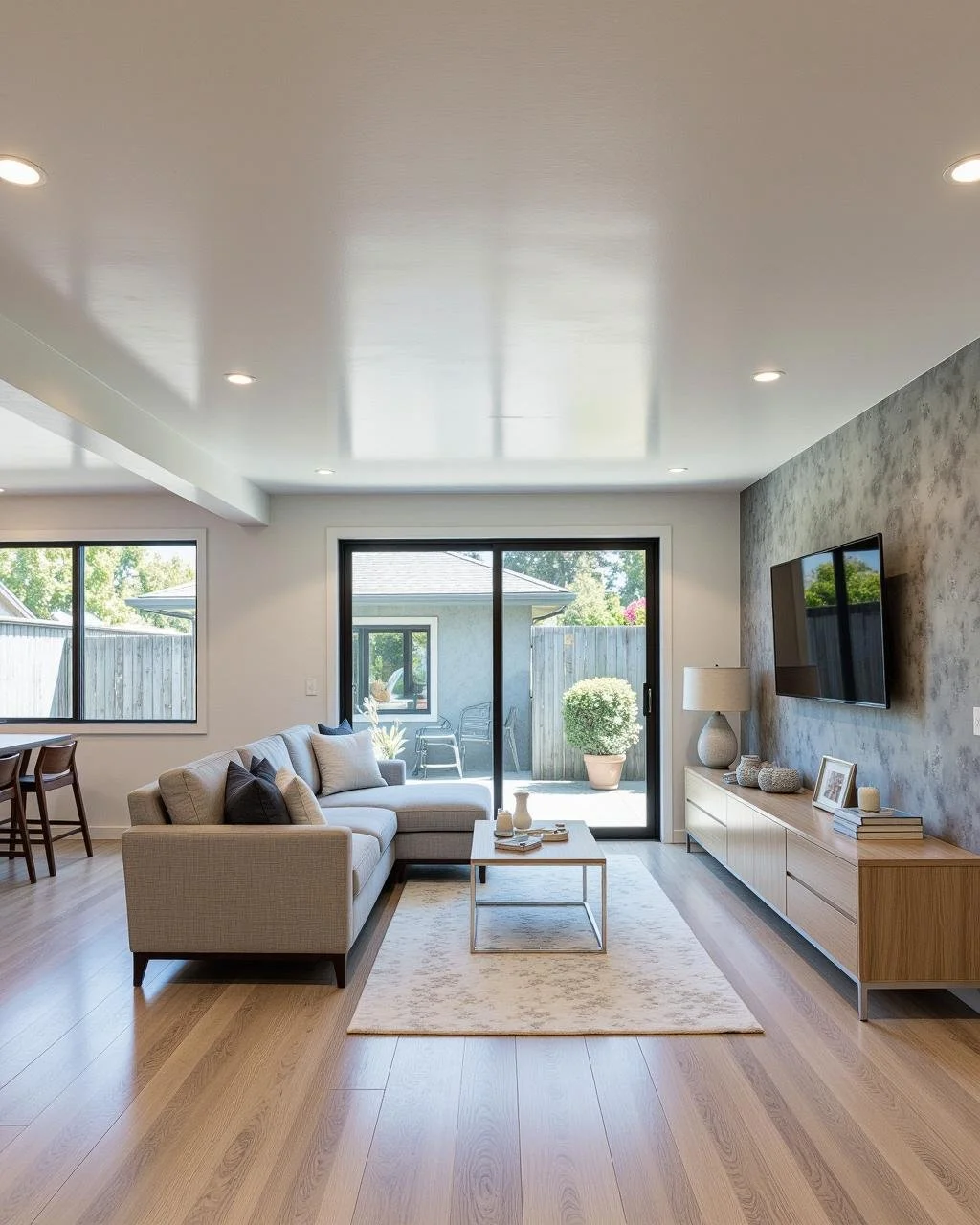
LIVING AREA
In most garage conversions, the living area and kitchen share an open-plan footprint — which is a design opportunity as much as a spatial constraint. How the ceiling height is treated (many garages offer more headroom than the primary home), where natural light enters, how the kitchen and seating zones relate, and where the entry threshold lands all shape whether the converted space feels expansive or boxed in. We plan these relationships before the framing goes up, not after.
-
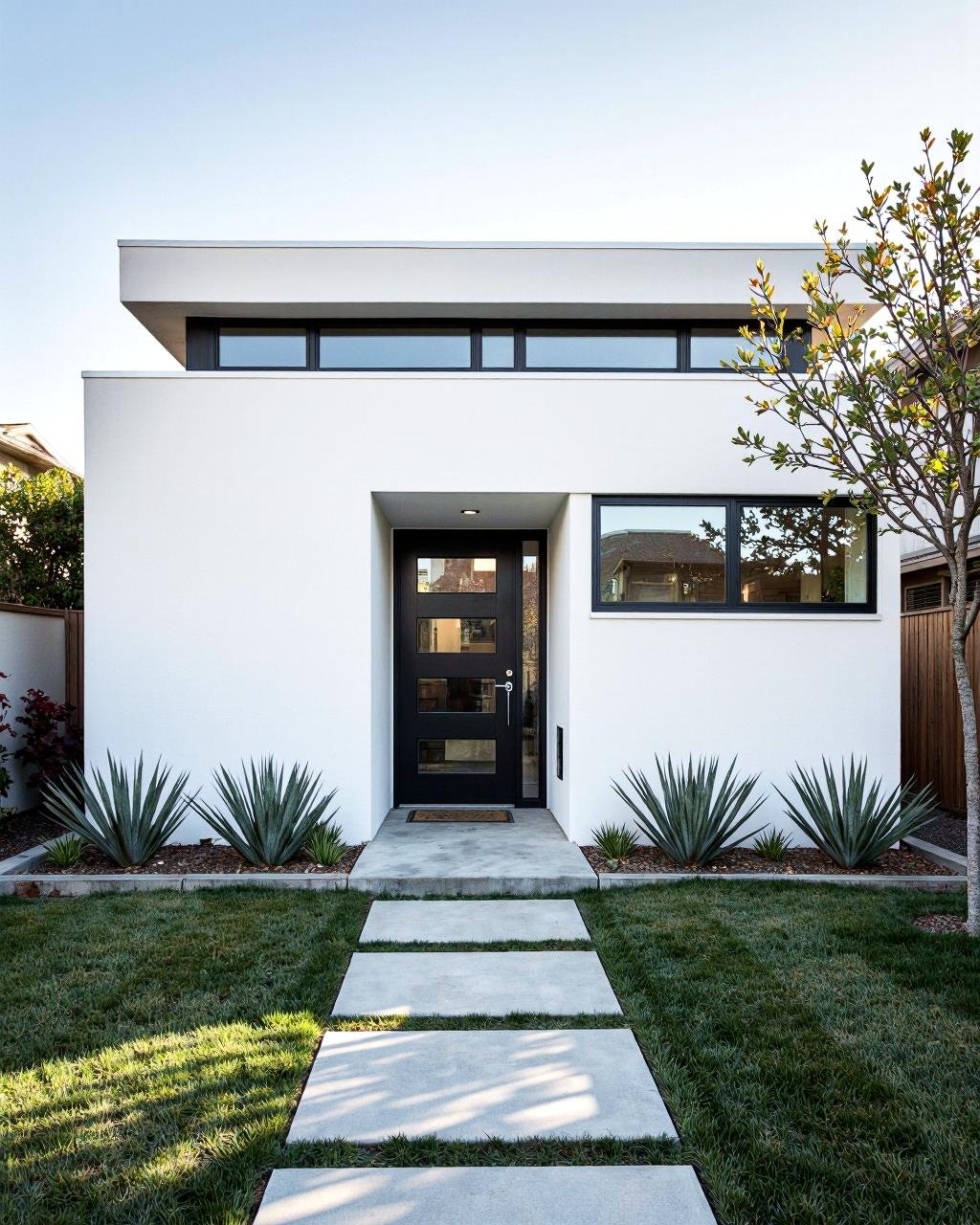
INDEPENDENT ENTRANCE
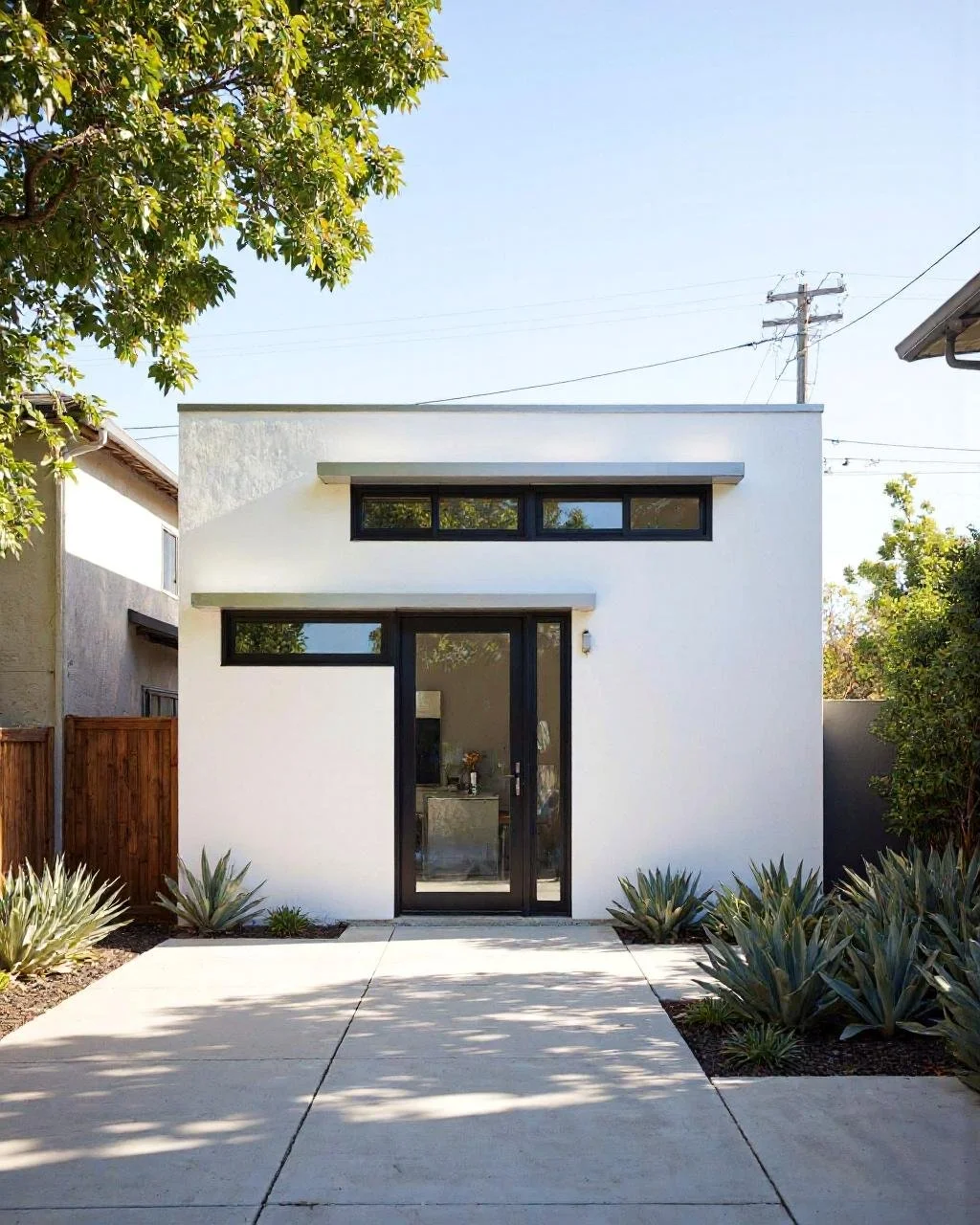
The garage door opening is a defining moment in every Los Angeles garage conversion. How it's handled — whether it becomes a wall of glass and a statement door, or a filled-in slab-grey closure that announces "this used to be a garage" — sets the tone for the entire unit. We approach the garage door conversion as a design decision, not a patch job. The result should look like it belongs, feel welcoming from the outside, and provide a genuine separation of arrival from the primary home.
-
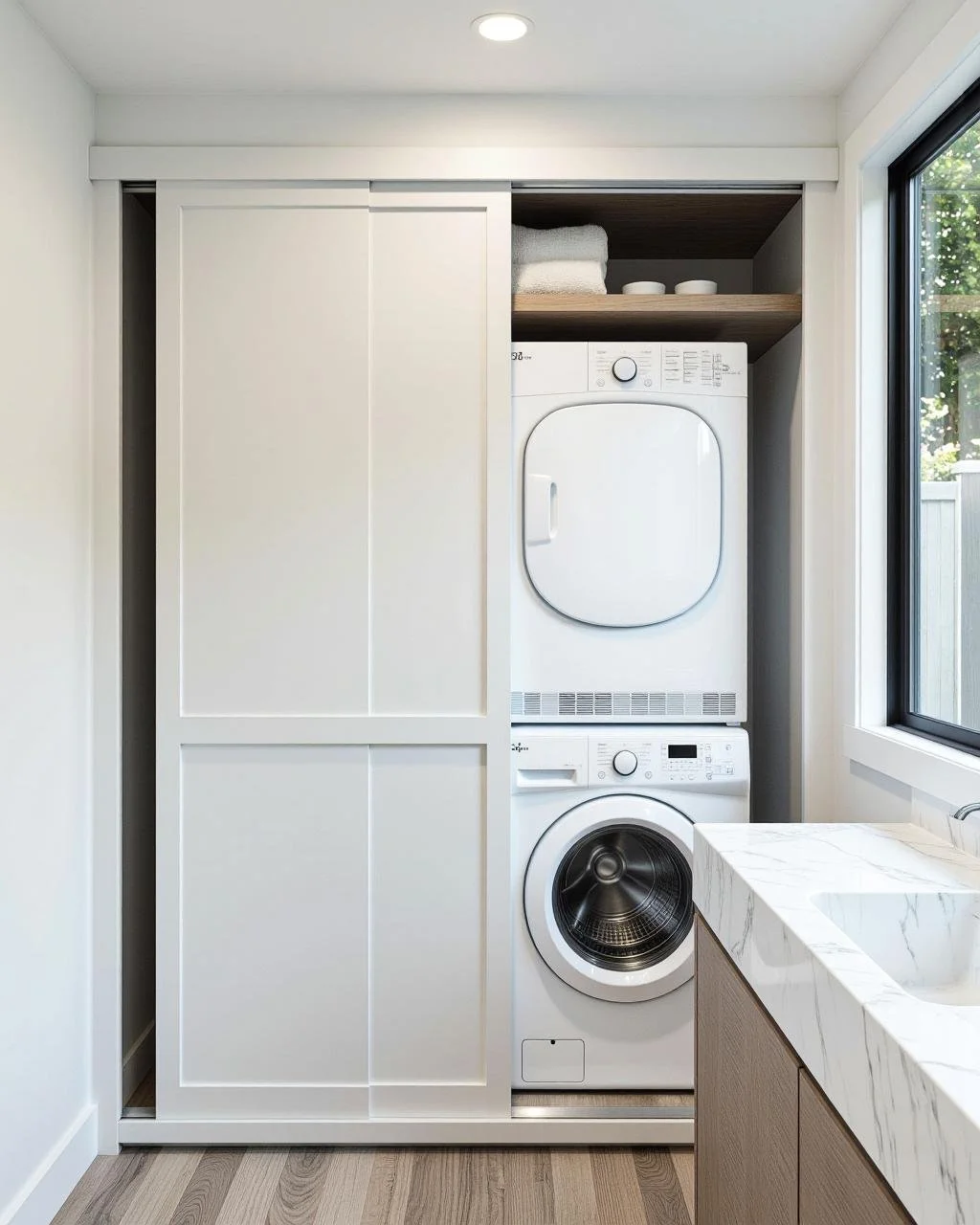
STORAGE & LAUNDRY
Not required by code, but often one of the most appreciated features in a Los Angeles ADU rental. Having laundry inside the unit greatly increases its appeal and makes it easier to attract and retain long-term tenants. Thoughtful storage — including adequate closets, pantry areas, and even exterior storage when feasible — serves the same purpose. These practical elements are what distinguish an ADU that lingers on the rental market from one that secures a lease quickly at full asking price.
Permitting a garage conversion in Los Angeles - how it works
Garage conversions in Los Angeles benefit from a more favorable permitting pathway than new-construction ADUs — but "more favorable" doesn't mean automatic or simple. LADBS still requires a complete set of architectural drawings, structural documentation where applicable, Title 24 energy compliance calculations, and mechanical, electrical, and plumbing plans. What the conversion doesn't require — in most cases — is discretionary review, design commission approval, or the parking replacement that used to kill garage conversion projects before state law intervened.
The practical implication: a well-prepared garage conversion application can move through plan check significantly faster than a new construction ADU of comparable size. The pre-approved ADU plan program the city offers includes garage conversion designs, which can further compress the timeline for homeowners whose existing garage dimensions fall within standard parameters. For custom layouts or non-standard structures, the standard plan check pathway applies — and how well-prepared that application is determines how smoothly it moves.
Under California law, if a garage conversion results in the loss of a required parking space, the city cannot require that space to be replaced if the property is located within half a mile of a public transit stop — which covers the vast majority of developed residential Los Angeles. For properties outside that radius, replacement parking may be required, but exceptions exist. We assess this as part of the initial feasibility review on every conversion project.
WORTH KNOWING!
We evaluate the existing garage in detail — structure type, slab condition, current electrical service, proximity to property lines, and any deed restrictions or HOA limitations that might affect the conversion. This assessment determines what the project realistically involves and what the permitting pathway looks like before any design work begins.
Site & Structure Assessment
Work proceeds with inspections scheduled at each required phase — foundation, framing, rough MEP, insulation, and final. Each phase is completed correctly before the next begins. We don't frame over rough plumbing before it passes inspection, and we don't insulate over rough electrical. These sequencing disciplines are basic, but they're where corners get cut on projects that later fail final.
Construction & Phased Inspections
Floor plans, elevation drawings, structural details, Title 24 energy calculations, and MEP plans are prepared to LADBS submission standards. If the project qualifies for the city's pre-approved ADU plan program, we evaluate that pathway for time savings. Custom designs are documented to the same standard, with the goal of minimizing plan check back-and-forth.
Design & Construction Documents
Certificate of Occupancy & handover
Final inspection passes when all work is complete, all systems are functioning, and all documentation is in order. The Certificate of Occupancy is the legal instrument that makes the unit rentable and habitable — and it's what separates a finished garage conversion from an unpermitted one, which carries its own significant risks for the property owner. We deliver it as a standard part of the project, not a hopeful outcome.
Applications are submitted with complete documentation packages. We track the application actively, respond to plan check comments within days rather than weeks, and maintain communication with the plan checker on complex items. Every week saved in plan check is a week sooner the project can break ground — and that timeline matters when rental income is part of the equation. See our other page about all types of ADUs
LADBS Submissions & Plan Check

"The garage was built to store things. The conversion is built to change what the property is — and what it can do for the family that owns it. That shift is worth doing right."
The cases for a garage conversion in Los Angeles
Why do it?
A garage conversion isn't for every homeowner or every property — but for the right situation, it's one of the most compelling improvements available in Los Angeles real estate. Here's an honest assessment of what it delivers, and why the calculus works the way it does in this city specifically.
Every other form of ADU construction in Los Angeles starts with building something that doesn't exist. A garage conversion starts with something that does. The foundation is poured. The roof is up. The walls are framed. That head start translates directly into a lower total project cost compared to a detached new-construction ADU of similar finished size — sometimes significantly lower, depending on the structure's condition. You're paying to transform, not to build from scratch. That distinction matters when you're evaluating the return on a capital investment.
You Already Own the Structure
The average detached garage in Los Angeles occupies between 400 and 600 square feet of some of the most expensive real estate in the country — and in most households, it primarily stores items that could live in a storage unit for a fraction of its carrying cost. Converting that footprint into a livable, income-producing, or family-supporting space is simply a better use of an asset you already own. The value realization doesn't require buying anything new. It requires building something good on what you already have.
A Smarter Use of Land You Own
Garage conversions in Los Angeles benefit from a streamlined permitting process under California's ADU reform legislation. The city cannot apply the same level of discretionary review to a conversion as it can to new construction, setback waivers for existing footprints are granted as of right, and parking replacement requirements have been largely eliminated. For homeowners who have watched new construction ADU projects get delayed for months in plan check, the conversion pathway offers a meaningfully faster route from permit application to Certificate of Occupancy.
The Permitting Path is Shorter
A permitted, well-executed garage conversion increases the market value of a Los Angeles property in two ways: it adds a legally recognized income-producing unit to the recorded structure, and it expands the buyer pool to include investors, multi-generational families, and owner-occupants who factor rental income into their purchase calculus. Properties in Los Angeles with existing, compliant ADUs routinely command premiums over comparable homes without them — and that premium has grown consistently as the ADU market has matured.
Property Value That Compounds
Los Angeles rental demand is structural, not cyclical — it's driven by a housing supply that has chronically underproduced relative to population for decades. A well-finished garage conversion in any established LA neighborhood occupies the lower-to-middle band of the rental market, which is precisely where demand is most consistent and vacancy rates are lowest. A 500 to 700 square foot unit with in-unit laundry, private outdoor space, and quality finishes doesn't sit on the market in Los Angeles. The income timeline from completion to tenancy is typically measured in weeks.
Rental Income that Supports it
A garage conversion ADU and a Junior ADU (JADU) created within the primary residence can coexist on the same Los Angeles lot under current state law. For homeowners with a detached garage and an interior room that can be independently accessed, this combination effectively doubles the income potential or housing capacity of the property without any new construction. The JADU pathway is intentionally low-barrier — streamlined permitting, no additional lot coverage, and minimal structural change — making the combined strategy one of the highest-value moves available to eligible homeowners in Los Angeles today.
The JADU Combination Strategy
Why Los Angeles homeowners
choose us as their garage conversion contractor
SKALWEST FOR GARAGE CONVERSIONS
There is no shortage of contractors in Los Angeles willing to quote a garage conversion. What's harder to find is a contractor who has done enough of them — across enough different garage types, structural conditions, neighborhood permitting contexts, and intended uses — to know what the real variables are and how to manage them before they become problems.
SKALWEST Construction manages every garage conversion in Los Angeles as a general contractor, which means we own the entire process: design documentation, permit application, trade coordination, construction sequencing, and final inspection. There is no hand-off between a designer, a permit expediter, and a builder. One team carries the project from the first site visit to the Certificate of Occupancy, and accountability runs in one direction — to the homeowner.
We've completed conversions across Los Angeles — attached garages on tight Silver Lake lots, detached two-car structures in the Valley, carport conversions in South Bay, and mid-century garage additions in Pasadena — and the quality standard doesn't change with the zip code.
From initial feasibility through Certificate of Occupancy, we manage the entire conversion under one contract and one point of contact. Homeowners don't have to coordinate between an architect, a structural engineer, a permit expediter, and a general contractor — we handle all of it, with clear communication at every stage.
Complete Design-Build Service
A garage conversion bid that doesn't account for what the slab requires, what the electrical panel needs, or what the framing will involve is not a savings — it's a deferred surprise. We assess the existing structure honestly before providing a scope, which means our estimates reflect the actual project rather than an optimistic version of it. Homeowners make better decisions when they have accurate information from the start.
Scope Assessment
Permit applications that are well-prepared move faster through LADBS — and faster permits mean earlier construction start dates and earlier rental income. Our documentation is accurate, our drawings are code-compliant from the first submission, and our responses to plan check comments are fast and specific. That discipline is worth real money on a conversion timeline.
LADBS Permitting Experience
A valid California contractor's license, general liability coverage, and workers' compensation insurance are non-negotiable requirements for any legitimate garage conversion contractor in Los Angeles. We carry all three. Homeowners can independently verify our license status through the California Contractors State License Board at any time — and we encourage it.
Licensed & Insured
SKALWEST Construction provides garage conversion and ADU services throughout Los Angeles and surrounding communities, including Santa Monica, Pasadena, Torrance, Altadena, Manhattan Beach, Hermosa Beach, Redondo Beach, Malibu, and Beverly Hills. We transform existing garages into fully functional living spaces — whether for rental income, extended family, guest suites, or private studios. Each project is approached with careful planning, structural consideration, and attention to local building requirements. From initial layout design to final construction, our team manages the process with clarity and coordination. The result is a well-integrated conversion that feels intentional, comfortable, and aligned with the character of the home.